
Khazanah: Journal of Islamic Education and Science
Vol. 2 No. 1 (2026)
The articles in this study (10 articles) encompass and examine four main pillars: (1) Contemporary Islamic Education Transformation and Innovation, which focuses on curriculum innovation, modern pedagogy, and adaptive learning in response to the dynamics of 21st-century education; (2) The Integration of Technology, Artificial Intelligence, and Big Data in Education, which highlights the use of AI, big data, and digital technologies to enhance learning quality and improve the effectiveness of educational management; (3) Strengthening Islamic Values, Moderation, and Character Building, which emphasizes the internalization of Islamic values, religious moderation, and the development of inclusive and religious character; and (4) Value-Based Educational Governance, Ethics, and Management, which addresses the strengthening of educational governance, public administration, media ethics, and value-based strategic management in responding to global challenges and social disruption.
This scholarly work represents an academic collaboration involving 30 authors from 18 higher education institutions across 13 provinces in Indonesia. Through a multidisciplinary and integrative approach, this work reflects the synergy between Islamic education, technology, pedagogical innovation, and the strengthening of Islamic values in responding to global transformation. The presence of this scholarly work demonstrates that cross-institutional and cross-perspective collaboration plays a strategic role in developing adaptive, humanistic, and sustainable education. Therefore, this scholarly work is expected to provide a meaningful academic contribution to strengthening the transformation of contemporary Islamic education in the digital era and global society.
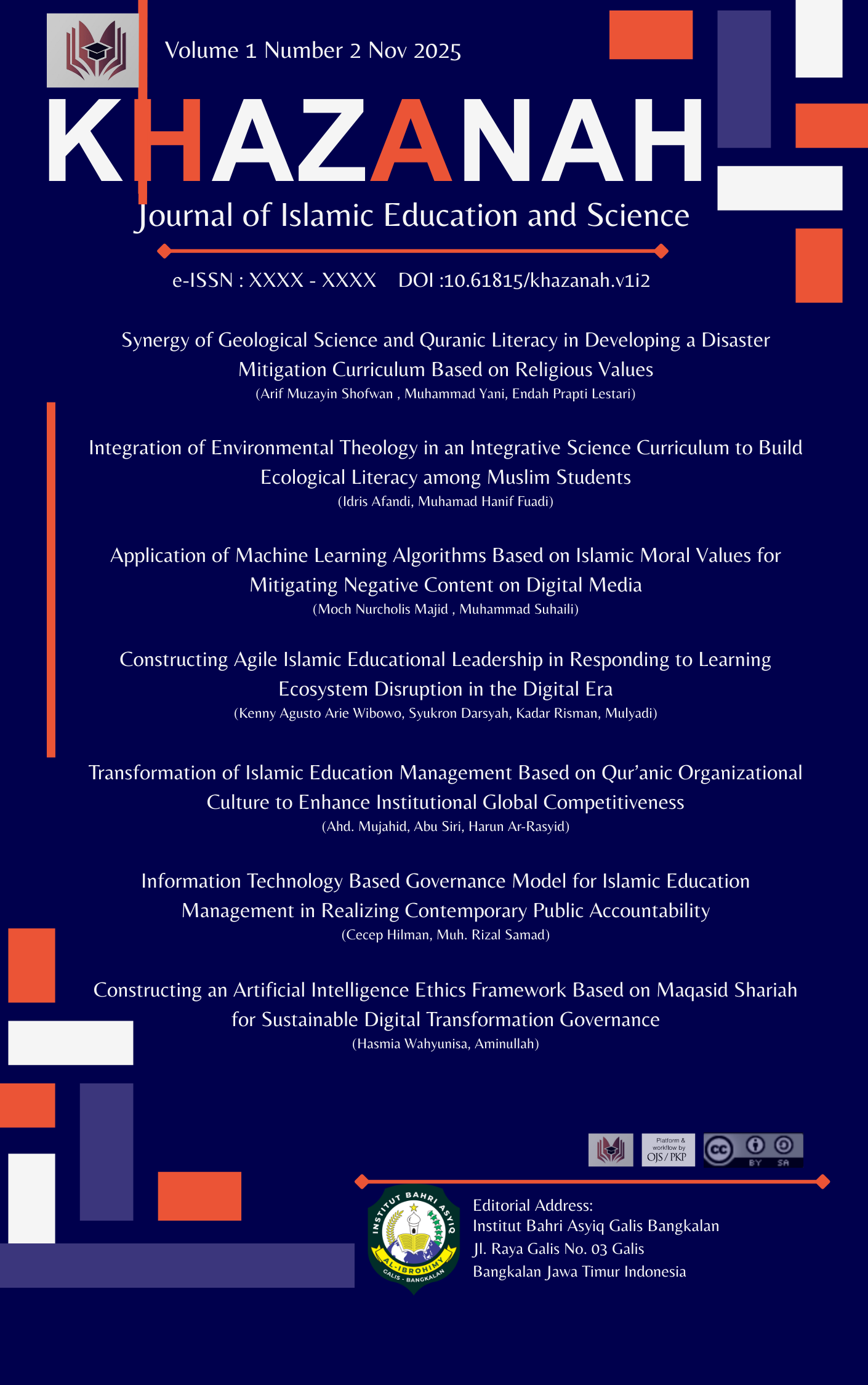
Khazanah: Journal of Islamic Education and Science
Vol. 1 No. 2 (2025)
Articles in this period (7 Articles) are organized into three integrative pillars: (1) Technology and Data Ethics: The reconstruction of algorithms and artificial intelligence frameworks grounded in prophetic ethics and the principles of Maqasid Shariah. (2) Religion Based Science and Mitigation: The integration of geology, ecological literacy, and disaster mitigation with Qur’anic values and theological perspectives. (3) Adaptive Leadership and Governance: The transformation of Islamic education management toward agile, accountable, and information technology driven systems.
“This volume presents an outstanding collaborative work involving 18 expert authors from 14 universities across 8 provinces in Indonesia. This edition explores the convergence of modern science, digital technology, and Qur’anic literacy. From religion based disaster mitigation to artificial intelligence ethics, each article offers innovative and solution oriented perspectives. Discover how this cross institutional collaboration redefines standards of governance and pedagogy in the era of disruption.”
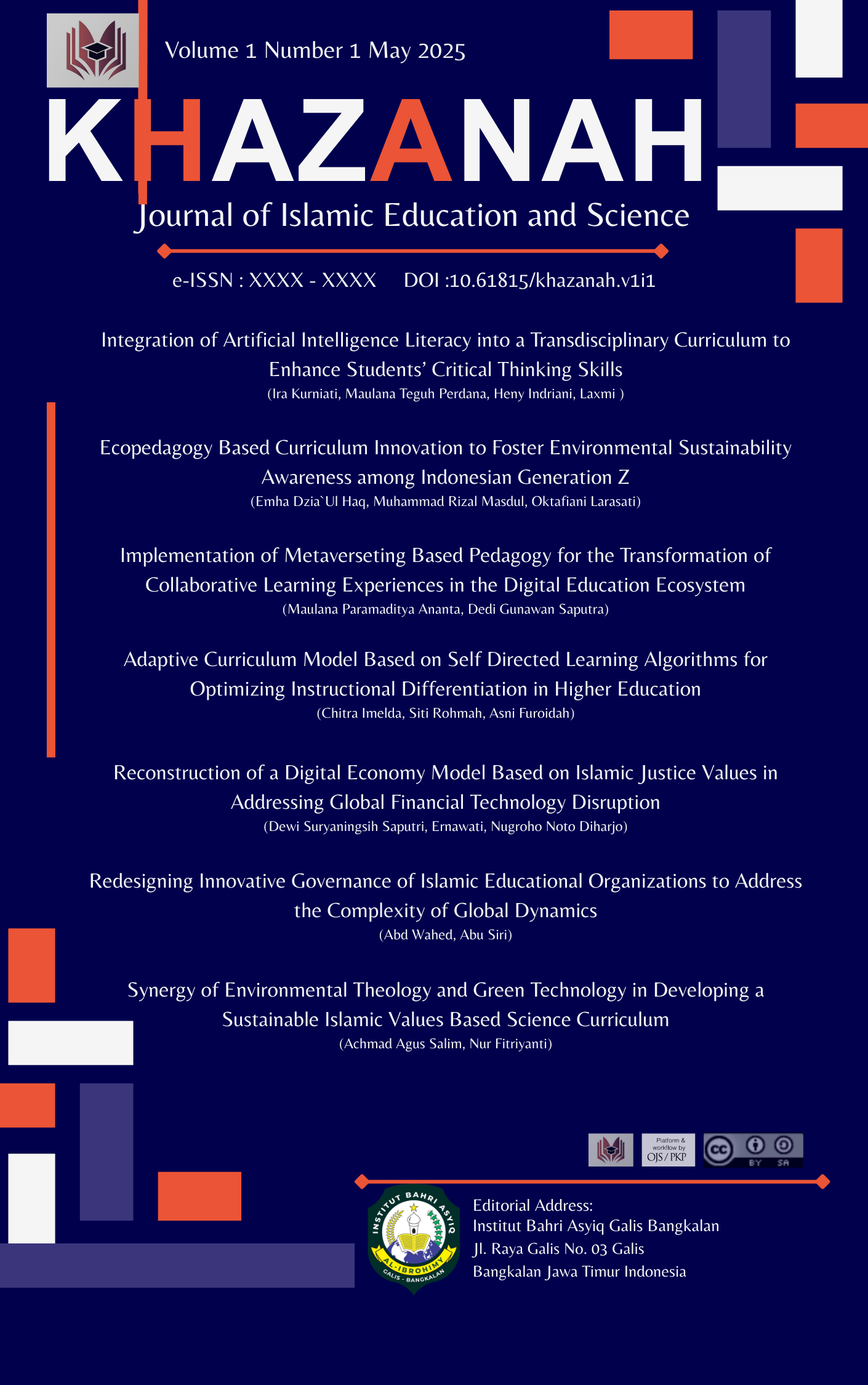
Khazanah: Journal of Islamic Education and Science
Vol. 1 No. 1 (2025)
Articles in this period (7 Articles) encompass and discuss three main pillars: (1) Futuristic Pedagogy: The use of Artificial Intelligence, the Metaverse, and algorithms to foster adaptive and critical learning. (2) Values and Sustainability: A focus on ecopedagogy, environmental theology, and the principles of Islamic justice. (3) System Reconstruction: The restructuring of transdisciplinary curricula and organizational governance in responding to global disruption.
“This volume presents an outstanding collaborative work involving 19 expert authors from 17 higher education institutions across 9 provinces in Indonesia. Through the integration of transdisciplinary perspectives, the volume explores the complexities of digital education and sustainability values. It stands as concrete evidence that cross institutional collaboration is essential in addressing global disruption. Discover new horizons in pedagogical transformation and governance reform here.”